A small balcony can become one of the most inviting areas of your home. Even with limited floor space, a few thoughtful choices can create a comfortable spot for morning coffee, reading, dining, or relaxing at the end of the day.
The key is to focus on comfort, function, and atmosphere. Choose items that serve a purpose, use the available space wisely, and add layers of texture and light to make the balcony feel warm and welcoming.
Start With a Simple Plan
Before buying furniture or accessories, take a close look at your balcony. Measure the width and length, note where the door opens, and consider how much sunlight, wind, or rain the space receives.
Think about how you want to use the balcony. You may want:
– A quiet place to read
– A small dining area
– A space for plants
– A comfortable spot for morning coffee
– A flexible area for entertaining guests
Choosing one main purpose will help prevent the balcony from becoming crowded. If you want the space to serve several purposes, look for pieces that can be folded, stacked, or moved easily.
Choose Furniture That Fits
Furniture has the biggest effect on how a small balcony feels. Select pieces that match the scale of the space instead of trying to fit full-size indoor furniture outdoors.
A compact bistro table with two chairs is a practical choice for dining or coffee. If you prefer lounging, consider a narrow bench, a small outdoor loveseat, or a single comfortable chair. Folding chairs and tables are especially useful because they can be stored when you need more open space.
Look for furniture with these features:
– Slim profiles
– Lightweight construction
– Foldable or stackable designs
– Weather-resistant materials
– Built-in storage when possible
Avoid placing too many separate items on the balcony. One comfortable chair and a small side table may feel more spacious and useful than several small pieces that leave little room to move.
Add Comfort With Textiles
Outdoor textiles can instantly make a balcony feel softer and more inviting. Add cushions to chairs, a seat pad to a bench, or a small outdoor rug under the furniture.
Choose fabrics made for outdoor use, especially if the balcony is exposed to moisture or strong sunlight. Outdoor cushions are usually easier to clean and less likely to fade than regular indoor textiles.
When selecting colors, start with a simple palette. Neutral shades such as cream, gray, tan, or soft green can make the area feel calm. Add one or two accent colors through pillows or a throw blanket.
Useful textile ideas include:
– A washable outdoor rug
– Seat cushions
– One or two small pillows
– A lightweight throw for cool evenings
– A fabric shade for extra privacy
A rug can also help define the seating area and make the balcony feel like an extension of your home. Choose a size that fits beneath the main furniture without covering the entire floor.
Use Lighting to Create Atmosphere
Good lighting can make a small balcony feel cozy after sunset. Since balconies often have limited space for lamps, use simple lighting that can be attached, hung, or placed on a table.
String lights are a popular option. Drape them along a railing, wall, or overhead support to create a soft glow. Battery-powered lanterns and LED candles can add warmth without requiring electrical outlets.
Consider using several small sources of light instead of one bright light. This creates a more relaxed atmosphere and helps the space feel layered.
Try these options:
– Warm white string lights
– Small rechargeable lanterns
– LED candles in protective holders
– Solar lights for a railing or plant containers
– A compact table lamp designed for outdoor use
Make sure outdoor lights are suitable for the conditions on your balcony. Keep cords secured and avoid placing electrical items where they may come into contact with water.
Bring in Plants
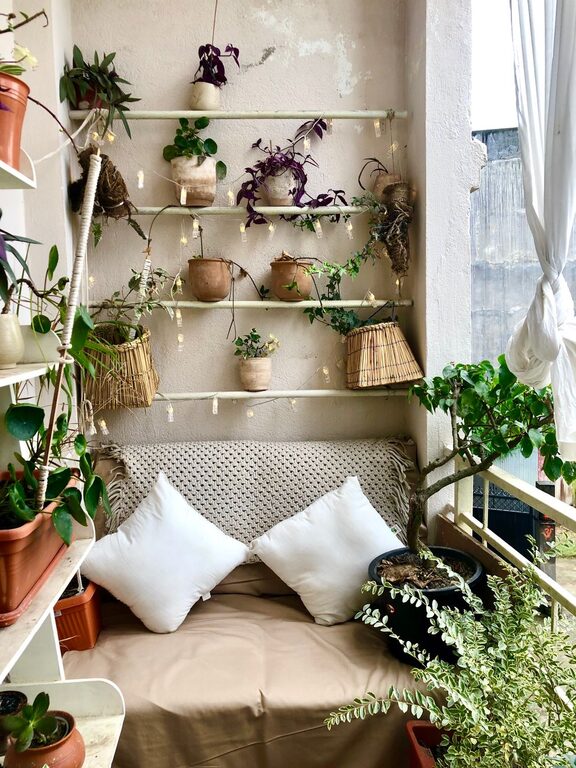
Plants add color, texture, and a natural feeling to a small balcony. You do not need a large collection. A few carefully placed plants can have a strong visual impact.
Use vertical space whenever possible. Rail planters, wall-mounted pots, and plant stands can keep the floor clear. Hanging planters are another useful option, provided they are securely installed and do not create a hazard below.
Choose plants based on the amount of sunlight your balcony receives. Some plants prefer bright, direct light, while others do better in shade or indirect light. Drought-tolerant plants can be a convenient choice for warm, sunny balconies.
Small balconies work well with:
– Herb containers
– Compact flowering plants
– Trailing plants
– Small evergreen plants
– Window boxes
– Narrow plant stands
Use pots in similar colors or materials to create a coordinated look. Grouping plants at different heights can make the balcony feel more full without taking up much additional floor space.
Add Privacy Without Blocking the Space
Privacy can make a balcony feel more comfortable, especially in an apartment building or busy neighborhood. You can create a sense of separation without making the area feel closed in.
A tall plant, outdoor curtain, bamboo screen, or woven panel can soften the view and provide some privacy. Choose a solution that allows airflow and does not block important access points.
For a lighter look, use a trellis with climbing plants or a narrow screen with an open pattern. These options can provide visual separation while allowing light to pass through.
Before installing anything, check your building rules and make sure the item is securely attached. Avoid placing heavy objects where they could fall or become unsafe in strong wind.
Make Use of Vertical Space
When floor space is limited, look up. Walls, railings, and the back of a door can provide useful storage and display areas.
Install hooks for small tools, lanterns, or folding furniture. A narrow wall shelf can hold plants, candles, or outdoor accessories. If drilling is not allowed, look for removable hooks, over-the-door organizers, or freestanding vertical shelves.
A compact storage bench can serve two purposes by providing seating and a place to keep cushions, blankets, or gardening supplies. Storage baskets can also help keep small items organized, but choose ones designed to handle outdoor conditions if they will remain on the balcony.
Use a Consistent Color Palette
A small space often looks more polished when the colors work together. Choose two or three main colors and repeat them across the furniture, textiles, pots, and accessories.
For a calm, natural look, combine wood tones with cream, green, and tan. For a brighter balcony, use neutral furniture with accents such as blue, yellow, or terracotta.
Keeping the palette consistent can make the area feel less cluttered. It also allows you to refresh the look easily by changing one or two small accessories each season.
Keep the Balcony Tidy
A cozy balcony should feel comfortable, not crowded. Regularly remove items you no longer use and keep everyday accessories in one designated place.
Use a small storage container for gardening tools, candles, and cushions. Fold furniture when necessary, sweep the floor regularly, and wipe down surfaces to prevent dust from building up.
Leave enough room to open the balcony door and move safely. A clear walkway, even on a very small balcony, will make the entire area feel more spacious.
Add Personal Details
The final touches should reflect how you want the balcony to feel. Add a favorite color, a small piece of outdoor artwork, or a decorative tray for drinks. A weather-resistant clock, patterned cushion, or handmade planter can also give the space personality.
Keep decorations limited to a few meaningful pieces. In a small area, each item is noticeable, so select accessories that are both attractive and useful.
With comfortable seating, soft lighting, greenery, and smart storage, even the smallest balcony can become a welcoming extension of your home. Start with the essentials, build in layers, and leave enough open space to enjoy the area comfortably.
About the Author